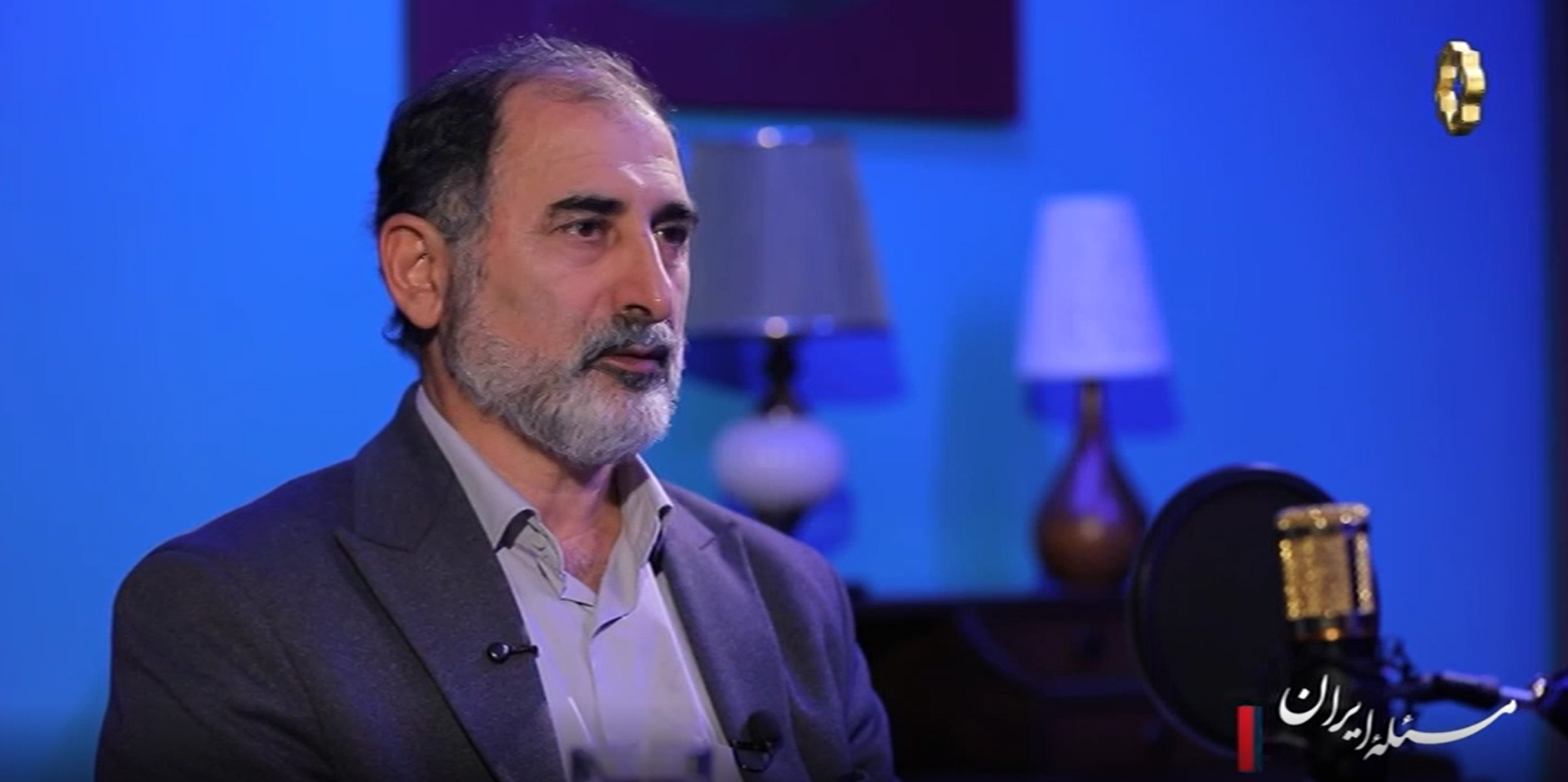
Host: Thank you, Doctor, for accepting our invitation. You have been researching a concept called “mental colonization” for some time. To begin, what made you feel this issue is so important that it deserves research and public warning?
Fanaei Eshkevari: Thank you. To speak frankly, I consider mental colonization one of the greatest intellectual and cultural crises of our society and many others. If once colonial powers occupied nations with guns, cannons, and tanks, today they have realized that lasting domination is only possible by occupying the mind and thinking of people. In this way, without firing a single bullet, colonizers can change the identity and beliefs of a nation.
Host: What exactly happens in this process? How do you define mental colonization?
Fanaei Eshkevari: Old colonialism occupied land and geography. New colonialism occupies minds and cultures. Today the goal is that the people of a country, without even realizing it, come to see the values, beliefs, and norms of the colonizer as “correct and superior,” and view their own culture as “worthless, backward, and useless.” The result? Without external pressure, the society itself moves toward intellectual and cultural dependence.
Host: What signs does this cultural domination have? How does it show itself in daily life?
Fanaei Eshkevari: Very clearly. One of the most important messages constantly repeated by intellectual colonization is that “Western culture is superior” and “our culture is backward.” Once this idea settles into the mind of a society, everything begins from there: inferiority, blind imitation, alienation from oneself, and ultimately dependence.
Host: You mean the same phenomenon that has long been referred to as “Westoxication”?
Fanaei Eshkevari i: Exactly. When a talented young person studies, grows, and then leaves his country because he has been led to believe that there is no room for progress here, mental colonization has taken effect. No one told him “you must leave,” but his mental structure has been transformed. There are other examples: values that were historically rooted in our culture suddenly get labeled as “backward,” while behaviors such as nudity, fighting modesty, or similar actions are praised as “modernity and progress.” Sometimes even educated individuals become so enchanted by the enemy that they ask foreign powers to attack their own homeland! This is the height of brainwashing and identity distortion.
Host: And through what channels do these changes in beliefs and behaviors occur? What are the tools of mental colonization?
Fanaei Eshkevari: There are multiple methods and channels:
- Education and universities:
Modern educational systems in most parts of the world are modeled after Western systems. The science that is transmitted comes with the worldview and values of the provider. Students are made to feel that “your religion and culture are ineffective; the correct path is our way.”
They have programs for every age, class, and gender, using all possible means—from cartoons, animation, and video games for children and teenagers to philosophy and mysticism for academic elites. They use pseudo-sciences, especially in the humanities—parapsychology, thought engineering—and literature, especially novels, to influence minds, dominate ideas, and change tastes, desires, and lifestyles.
- Propaganda and seemingly charitable activities:
Throughout colonial history, alongside military forces, there were always religious or cultural missionaries. In the conquest of the lands of Native Americans, in the enslavement of Africans, and in all colonized regions, you see priests standing next to military commanders and looting merchants. Today, under the titles of “NGO,” “charity,” or “development aid,” they target the minds of the next generation in poor and weak countries. Those whose work has always been killing and plundering now, under humanitarian slogans, carry out charitable actions—which is also a way of plundering, only more sophisticated, cheaper, and more profitable.
- Media and the entertainment industry:
Oral, written, and visual media are tools of cultural colonization. Cinema, television, fashion, music, and games are not just entertainment; they carry messages and values. Hollywood today is the largest cultural colonial institution in the world.
- Cyberspace:
The platforms and networks that have the greatest influence on today’s youth—who owns them? What culture do they reproduce? This space is the greatest tool for value infiltration and mental colonization.
- Language:
Imposing a foreign language is equal to imposing foreign thinking and culture. English in India, French in Africa, and numerous other cases prove this. Today, foreign languages are declared “superior,” and native languages are belittled. In the guise of language teaching, they export and implant their own values and culture.
Host: What are the consequences of mental colonization? Why should we take it seriously?
Fanaei Eshkevari: Its consequences are destructive and disastrous:
* It creates an identity crisis.
* It causes individuals and society to develop inferiority complexes.
* It makes one distrustful of one’s own culture and infatuated with the foreigner.
* It produces intellectual dependence, followed by political, economic, and cultural dependence.
Today you see countries where military colonialism has ended but mental colonialism remains; they appear independent but in thought and culture are followers of others—and this maintains the dominators’ illegitimate power and interests.
Host: Can we confront this colonization? What is the solution?
Fanaei Eshkevari: Certainly we can, but it is not simple. It is complex and multilayered. There are several key steps:
- Raising awareness:
First, a person must realize that their mind has been occupied—and this is the hardest stage. Someone suffering from mental colonization imagines that they are “enlightened, free, and independent” and refuses to believe they have been deceived.
- Strengthening critical thinking and truth-seeking:
We must reinforce the ability to distinguish truth from falsehood, reality from propaganda and rumor, and develop independent analysis.
- Conscious return to native identity and culture:
Our culture has a vast heritage—literary, mystical, philosophical, ethical, spiritual, and civilizational. Recognizing and introducing this to the educated generation restores cultural confidence.
- Exposing the true face of colonialism:
The history of colonialism must be told. If people learn what European colonialists did to the nations of the world, and how they built their castles of prosperity upon the corpses of hundreds of millions of oppressed people and the ruins of colonized lands, they will not be easily deceived.
- Using modern technologies to reclaim minds:
We must reverse-engineer the very tools used for cultural domination and employ them in resistance. We should use art, media, cyberspace, the humanities, and even artificial intelligence to showcase the power and richness of our culture.
It is important to note that we are not enemies of “science, technology, or modern art.” These are valuable and should be welcomed wherever they may be. But we must fight against “false beliefs, corrupt values, domination-seeking, and cultures opposed to ethics and spirituality.” The essential point is that true freedom and independence begin with intellectual freedom and independence. Until the mind becomes free and independent, the human being cannot be free and independent.
Host: Thank you for explaining this important issue in such simple and clear language.
Fanaei Eshkevari: I thank you for paying attention to this subject.