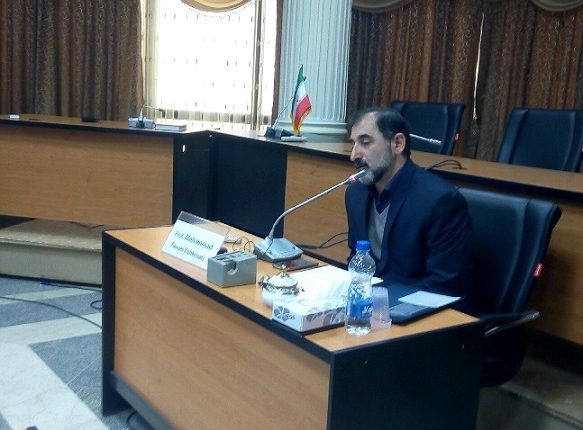
Philosophical Thought in Contemporary Iran: Challenges, Opportunities, and Future Horizons
On the Occasion of World Philosophy Day
In Conversation with Prof. Mohammad Fanaei Eshkevari
Part One: Generalities and Assessment of the Current Situation
- Continuity or Disruption of the Philosophical Tradition in Iran
Can we speak of the continuity of the philosophical tradition in contemporary Iran, or are we facing a kind of disruption and hiatus in philosophical thought?
Although philosophical thought in contemporary Iran has always been accompanied by difficulties, shortcomings, and limitations, one cannot speak of a complete disruption. Iran’s philosophical tradition, with all its ups and downs, still continues. The existence of teaching positions in seminaries (*hawzas*) and universities, the publication of specialized books and journals, the holding of meetings and conferences, and the philosophical activities of researchers are all signs of the relative dynamism of this tradition.
However, if we consider philosophy not merely as knowledge but as thought, we must admit that philosophy in Iran has largely remained within the confines of the elites and has not yet permeated the public sphere in a widespread manner. Despite this, one cannot say that philosophical thought is completely separate from social life; although still limited, it has sometimes appeared in the form of public dialogues, media, and efforts such as Philosophy for Children and technology ethics. Programs like Philosophy for Children workshops in schools or media discussions on the ethics of artificial intelligence in television programs are examples of this gradual infiltration, which can serve as a platform for the expansion of philosophical thought into broader layers of society.
Of course, today in the country, there is no proportionality between the vast number of philosophy students and the production of philosophical thought. There was a time when out of fifty students of wisdom (*hikmat*), at least ten philosophers would emerge, but today, from thousands wandering in this realm, one can scarcely find a few philosophers. There are many who engage in philosophizing (*mutafalsifān*), but few true philosophers (*falāsifah*). Indeed, the lamp of wisdom (*hikmat*) in Iran is still alight, but in the hands of a small number. Meanwhile, a great multitude merely earn their bread and waste it, alas, by this name alone. For many who step into this realm, what matters is not the depth of thought, but the degree and title which they seek as a key to achieving a purpose outside of wisdom. For these, reading philosophy is not a journey into the depths of existence and the attainment of knowledge, but a passage for gaining position. Of course, not all the blame lies with those engaged in philosophy. A major part of this deficiency must be sought in the perspective of managers and officials; where the role of the philosophy graduate and the horizon before him is shrouded in ambiguity.
- The Relationship of Contemporary Iranian Society with Philosophical Thought
To what extent is the intellectual climate of Iran today receptive to philosophical thought, and has philosophy been able to move beyond the realm of elites and formal education and establish a presence in the public sphere?
Iran today is in a transitional stage between two horizons: on one hand, the tradition of Islamic philosophy rooted in philosophical schools such as Peripatetic (*masha*), Illuminationist (*ishrāq*), and Transcendent Wisdom (*al-hikmat al-muta’āliyah* / Sadraian), and on the other hand, modern Western philosophy, which entered Iran through translation and the university since the 19th century. However, the relationship between these two realms is still not well clarified. Western philosophy is present in Iran, but its place and relationship with our philosophical tradition have not been properly determined. Naturally, this process is time-consuming and sometimes slow.
In universities, we are mostly faced with the teaching and transmission of concepts of Western philosophy, and in seminaries (*hawzas*), the emphasis is on Transcendent Wisdom and Sadraian philosophy. Books, articles, as well as meetings and conferences focusing on comparative philosophy can lead to the mutual enrichment of both traditions.
- The Connection of Philosophy with Lived and Social Issues
To what extent has philosophy in contemporary Iran been able to connect with the lived and real issues of society and provide answers to the fundamental questions of the Iranian individual?
Philosophical thought in current Iran – both Islamic and Western – is often abstract and less engaged with the lived questions of Iranian society, such as the identity crisis, the relationship between religion and life, ethics in the age of technology, or the lifeworld of contemporary humans. Philosophy in Iran is still more about teaching and text-reading than thinking about life. Mental reflections should serve to solve objective problems. How many of our treatises have actually helped solve our problems? However, one cannot speak of a complete lack of this connection; in recent years, attention to the link between philosophy and everyday life, ethics, politics, education, and media has been increasing. This emerging trend could bring philosophy from the margins to the center of social issues and provide answers to questions related to human individual and social life. Our traditional philosophy is mostly heavenly (*’arshi*); we must, while preserving the heavenly nature of philosophy, also make it earthly (*farshi*), bringing it down from the sky to the earth, so that it is present everywhere, from the highest heaven to the earth, from the sky to the earth. This is the teaching of our religion. Some desire the world, and a group loves the hereafter, but the Quran rejects both secularism and complete world-renunciation, saying: Say, “I desire both.” *Our Lord, give us good in this world and good in the Hereafter* (Quran 2:201).
Part Two: Education, Institutions, and Internal Dialogues
- Challenges of Teaching Philosophy in Universities
What are the most important challenges of teaching philosophy in Iranian universities, and where should the roots of the memory-centric, imitative, and outdated nature of the philosophy education system be sought?
Philosophy education in Iran faces numerous structural challenges. The educational system is often focused on memorization, reproduction, and at best, explaining the views of philosophers, without sufficiently teaching students the skills of critical thinking and analyzing new issues. For example, students might become familiar in detail with the ontology and anthropology of Plato and Aristotle, but they cannot apply these concepts to analyze contemporary issues such as the meaning of life, the environmental crisis, or the ethical challenges of artificial intelligence. The roots of this memory-centric approach can be found in traditional educational patterns, a lack of up-to-date resources, and test-oriented pressure, which sacrifices creative thinking for rote learning.
Course curricula also require fundamental revision. While contemporary Western philosophy with philosophers like Wittgenstein, Heidegger, and Derrida is included in the syllabi, attention to non-Western schools of thought such as East Asian philosophy, African philosophy, and indigenous thought is insufficient. Furthermore, the lack of a systematic connection between philosophy and the natural and human sciences reduces the depth of philosophy education. To overcome this outdatedness, one can draw inspiration from interdisciplinary models, occasionally using two professors with different approaches and backgrounds in a single class, or holding practical workshops that compel students to write analytical essays on current issues.
- Academic Philosophy or Living Thought?
Has philosophy in Iranian universities been reduced to mere academic knowledge, or can we still speak of the presence of living thought in this space?
Global experience shows that academic philosophy and living thought can complement each other. In Iran, the gap between the academic sphere and society requires bridge-building. Creating chairs for theorizing, holding joint roundtables with thinkers and social activists, and establishing specialized journals that can present philosophical discussions in a language understandable to the public are among the possible solutions. Additionally, programs such as inviting philosophers to podcasts or social media, and encouraging students to undertake applied projects like the philosophical analysis of educational or environmental policies, can revive living thought and bring philosophy out of isolation.
- Dialogue Between Islamic Philosophy and Western Philosophy
What is the status of the dialogue between Islamic philosophy and Western philosophy in Iran, and what obstacles have prevented the formation of a common language between the university and the *hawza* (seminaries)?
Steps have been taken towards dialogue between Islamic philosophy and Western philosophy, but a long road lies ahead. One fundamental obstacle is mutual unfamiliarity: many *hawza* scholars are not familiar with the language and concepts of Western philosophy, and many academics are unaware of the foundations of Islamic philosophy and its traditional language. Without creating a common language and context, genuine and fruitful dialogue is difficult. This unfamiliarity stems from the historical separation of educational institutions. The *hawzas* have focused on classical Arabic texts, and universities have relied on Western translations, which, instead of dynamic exchange, directs them along two different paths.
Dialogue between Islamic philosophy and Western philosophy requires the creation of conceptual and methodological bridges.
For instance, systematic comparisons can be made between the concept of “existence” (*wujūd*) in Sadraian philosophy and “Being” in Heidegger’s philosophy, or between “theoretical and practical intellect” in Islamic philosophy and “instrumental rationality” in the West. Holding joint meetings between the *hawza* and the university, and establishing interdisciplinary branches are positive steps in this direction. Furthermore, projects such as the two-way translation of key texts – from Avicenna and Mulla Sadra into English, or from Aquinas and Kant into Persian – and joint online sessions can help reduce linguistic and cultural barriers and provide a ground for deepening and elevating philosophical thought.
- Applied Philosophies and Interdisciplinary Studies
What is the state of applied philosophies and interdisciplinary studies in Iran, and to what extent have they been able to lead to the production of indigenous and applied thought?
In the realm of knowledge, geographical and cultural boundaries cannot hinder intellectual interaction. Philosophy, as a rational endeavor to understand the world and human life, is the common heritage of all humanity. We must familiarize ourselves with different philosophical traditions – from ancient Greek philosophy to contemporary European philosophy, from Hindu wisdom to Chinese philosophy – and examine them with a critical eye. By critically absorbing other philosophical thoughts, we can reconstruct indigenous intellectual traditions. The future of philosophy in Iran depends on a global perspective, free-thinking, and intellectual creativity that draws from both indigenous traditions and engages in dialogue with the intellectual achievements of other nations. Philosophy is a sincere search for reaching the truth. The philosopher visits anywhere where a sign or clue of truth is seen and accompanies anyone who travels on this path. The stranger and the ‘other’ from which one should distance oneself is ignorance and falsehood, not the West, the East, or anything else.
In recent years, attention to applied philosophies – such as philosophy of science, ethics, art, law, and politics – has been increasing, and efforts have been made to connect philosophy with other domains of knowledge, but it is still in its initial stages and has rarely led to indigenous frameworks and practical applications. For example, in the philosophy of technology, one should not only be familiar with Western theories but also examine the impact of new technologies on lifestyle, family, and social values in Iran. These examinations could include analyses based on Islamic-Iranian traditions, such as the concept of “justice” in Farabi’s philosophy and its application to contemporary political issues, which is still largely overlooked.
Despite this, advancements such as the establishment of interdisciplinary research centers in some universities and the publication of some journals in the field of applied philosophies indicate a growing capacity. To achieve indigenous thought, it is necessary to prioritize projects like philosophy of art or environment inspired by Islamic-Iranian wisdom and mysticism, or AI ethics based on Islamic theology and teachings, so that philosophy transforms from a purely theoretical state into a basis for solving the objective problems of society.
- The Role of Language in Philosophical Thought
What is the role of language in Iranian philosophical thought, and to what extent has a translation-centric approach hindered the production of original thought? Does the Persian language have the necessary capacity to express new philosophical concepts?
Language and translation play a fundamental role in the growth of philosophy in Iran. Philosophical translations have been very effective in familiarizing us with Western thought, but relying solely on translation can hinder the production of original thought. This reliance often leads to superficiality; Western concepts are included raw in Persian texts without indigenization, remaining distant from Iranian cultural richness.
Familiarity with the original languages of philosophy helps in a more precise understanding of ideas, but if translations are correct and accurate, they can compensate for this shortcoming to some extent. The Persian language has the potential capacity to express philosophical concepts, as evidenced by Avicenna in his “Danishnama-ye Alai”, Suhrawardi, and Khajeh Nasir in their works, who tried to employ the Persian philosophical language, but this current remained unfinished and this tradition was not seriously continued. Reconstructing and expanding the Persian philosophical language is a serious necessity. Today, the linguistic challenges in philosophy are multidimensional: first, the need to standardize philosophical terminology and create specialized encyclopedias; second, training translators who are both proficient in the source and target languages and familiar with philosophical foundations; third, developing the Persian language to express complex contemporary philosophical concepts.
Part Three: Identity, Tradition, and Confrontation with the ‘Other’
- The Connection of Philosophy with Mysticism, Religion, and Literature
What place does the historical connection of philosophy with mysticism, religion, and literature hold in contemporary Iran, and is this connection still alive and dynamic?
In Iran’s intellectual tradition, philosophy has always been in a dynamic dialogue with mysticism and religion. This profound connection can be seen in the works of Farabi, Avicenna, and especially Suhrawardi, who sought to synthesize Greek, Iranian, and Islamic philosophies with Islamic mysticism, or in the philosophical system of Mulla Sadra, which became famous as “Transcendent Wisdom” and blended philosophical rationalism with mystical revelation and Quranic teachings. In the contemporary era, this tradition has continued in the works of thinkers such as Imam Khomeini, Allamah Tabatabai, Ayatollah Hassanzadeh Amoli, and Professor Javadi Amoli.
The connection between mysticism and literature has also always been strong in Iran, to the extent that Islamic-Iranian mysticism cannot be separated from Persian literature and poetry. Our philosophy was also not unrelated to literature in the past; the allegorical stories of Avicenna and Suhrawardi indicate this connection and show that our sages had thoughts they felt needed to be expressed in literary language. Even forms of philosophical novels existed in our tradition, such as Ibn Tufail’s “Hayy ibn Yaqzan”, which was inspired by Avicenna and became very influential in the Western world. But this tradition, unfortunately, did not continue in the Islamic world, whereas it has been very common in the West from the past until today. Philosophical novels are a literary genre that promotes philosophical thinking among a wider public. Reconstructing the connection between philosophy and literature can enrich the language of philosophy and increase its social impact. Of course, the philosophical novel is also taking shape weakly in our country, and also in the poetry of some contemporary poets, elements of philosophical mysticism can be seen which can be re-read through philosophical analyses, and programs such as literary-philosophical workshops in universities can revive this connection. This dynamism not only helps preserve cultural identity but also saves philosophy from academic isolation and turns it into a living dialogue with the younger generation.
- Can We Speak of an ‘Iranian Philosophy’?
Can we speak of a philosophy called ‘Iranian philosophy,’ or is philosophy inherently universal and does not belong to a specific nation?
The discussion about ‘Iranian philosophy’ requires conceptual precision. If the meaning is the philosophical tradition of Iran before Islam, one can refer to the Khusrawani wisdom (*Hikmat-e Khusrawani*) that Suhrawardi spoke of, although few written sources of it remain. After Islam, philosophy in Iran developed within the framework of Islamic philosophy but was also influenced by Iranian cultural and intellectual elements.
This influence, however, is greater in mysticism than in philosophy; for example, the influence of the Iranian *Javanmardi* tradition on Islamic mysticism is very prominent.
It is important to note that philosophy is inherently a universal matter and should be evaluated based on rational and argumentative criteria. Philosophy is the search for truth, not a national or racial affair. Just as physics or logic are universal, philosophy must also be understood based on reasoning and rationality, not on the basis of ethnic or cultural attachments. Iran has been one of the important contexts for the growth of philosophy, but ‘Iranian philosophy’ means ‘philosophy in Iran,’ not ‘a philosophy specific to Iranians.’ Just as we speak of ‘German philosophy’ or ‘French philosophy,’ we can also speak of ‘philosophy in Iran,’ meaning the participation of Iranian philosophers in the global tradition of philosophy.
- Confrontation with Western Philosophy
How can the Iranians’ confrontation with Western philosophy in the contemporary era be described, and are the conditions ripe for a creative and critical confrontation?
The Iranians’ confrontation with Western philosophy can be divided into three historical periods: The first period began with the translation of Western philosophers’ works in the Qajar era; the second period continued with the systematic teaching of Western philosophy in universities, and the third period involves comparing and criticizing these ideas. Now, while continuing comparison and critique, the time has come to enter the fourth stage, namely the production of original philosophy based on critical dialogue with different intellectual traditions. Mere imitation of Western philosophy, or its complete rejection – both of which are unfortunately common in Iran – leads nowhere. The correct path is mutual critique, constructive dialogue, and effort to reach a productive synthesis.
- Western Philosophy: The Other or a Common Heritage?
Is Western philosophy still considered the ‘Other’ for us, or can it be considered part of the common intellectual heritage of humanity?
In the realm of knowledge, geographical and cultural boundaries cannot hinder intellectual interaction. Philosophy, as a rational endeavor to understand the world and human life, is the common heritage of all humanity. We must familiarize ourselves with different philosophical traditions – from ancient Greek philosophy to contemporary European philosophy, from Hindu wisdom to Chinese philosophy – and examine them with a critical eye. By critically absorbing other philosophical thoughts, we can reconstruct indigenous intellectual traditions. The future of philosophy in Iran depends on a global perspective, free-thinking, and intellectual creativity that draws from both indigenous traditions and engages in dialogue with the intellectual achievements of other nations. Philosophy is a sincere search for reaching the truth. The philosopher visits anywhere where a sign or clue of truth is seen and accompanies anyone who travels on this path. The stranger and the ‘other’ from which one should distance oneself is ignorance and falsehood, not the West, the East, or anything else.
Philosophical thought can protect us from becoming tool-obsessed and alienated, and enable the wise utilization of technological achievements. Iranian philosophers can engage with these discussions and open new horizons by drawing on the rich heritage of Islamic wisdom (which is broader than philosophy in the specific sense) in areas such as the philosophy of the soul and practical wisdom, and by using the experiences of other nations.
Part Five: Future Outlook and Responsibilities
- Neglect of Philosophy, Neglect of Thought
To what extent can it be said that the intellectual and cultural crises of Iranian society stem from the neglect of philosophy and philosophical thought?
Neglect of philosophy is neglect of thought. Civilization does not form without thought. Many of our cultural, ethical, and social crises are rooted in the weakness of philosophical thought. For instance, ethical crises are not solved merely by sermons and statements, but require philosophical explanation, education based on rationality, and rethinking religious teachings. Also, complex environmental issues are not answered by technical solutions alone, but require reflection on the philosophical foundations of the relationship between humans and nature. The same applies to other domains such as ethics, art, media, lifestyle, and mental and spiritual health. If philosophy is not attentive to the real needs of society and remains solely in abstract discussions, it cannot help solve problems. Mere quantitative growth in philosophy reading and establishing philosophy centers and faculties does not necessarily mean the growth of thought. Many study philosophy imitatively and, instead of being freed from baseless prejudices and dogmas, become imprisoned by new prejudices and dogmas. Therefore, the type of encounter with philosophy and the correct method of philosophical education is important.
- The Responsibility of the New Generation of Philosophers
What responsibilities does the new generation of Iranian philosophers have in reviving the philosophical tradition and modernizing it in light of the needs of the time?
The new generation of Iranian philosophers faces a grave responsibility: creating a philosophy that is both rooted in indigenous traditions and responsive to the issues of the contemporary world. This generation must, by mastering the Islamic philosophical and wisdom heritage and being aware of global philosophical currents, present ideas that have both authenticity and effectiveness and problem-solving capacity. We possess a precious philosophical heritage. Our predecessors, with their unsparing efforts, paved the way for philosophical thought and provided a suitable ground and context for philosophizing. Preserving, advancing, and expanding this achievement is the duty of the new generation.
Our predominant traditional view of philosophy has been a theological one, and we have used philosophy mainly to solve theological issues. The current predominant view in Islamic philosophy is still this, and not much transformation has occurred in this direction. Of course, the theological approach to philosophy is very important and is a basis and foundation for philosophizing in other fields. We should not only not turn away from this approach but should continue it with strength, and indeed, we should update it and seriously address new theological questions and challenges. The entire point is that our conception of philosophy should not be limited to this approach, and our philosophical concerns should not be confined solely to this framework. Rather, philosophy, as a system of rationality, should encompass all fields related to human life, because in no field or arena are we in no need of rational thinking.
- The Social Function of Philosophy
What social function can philosophy have in solving the ethical, identity, and political crises of Iranian society?
Part Four: Currents, Roles, and New Issues
- New Currents in Iranian Philosophy
What new currents and schools of thought have emerged in the contemporary philosophical space of Iran, and what impact have they had on the intellectual orientation of society?
In recent decades, analytic philosophy, with its focus on methodology and conceptual clarity, has found a suitable place in Iran’s academic space. This current has received particular attention in fields such as philosophy of mind, philosophy of language, and epistemology. Alongside it, Continental philosophies, including phenomenology, hermeneutics, and intercultural philosophy, have also been welcomed. In this regard, one can point to the translation and interpretation of the works of Husserl, Heidegger, and Gadamer in academic centers. A significant point is the emergence of integrative currents that seek to create dialogue between these different philosophical traditions. For example, comparative study between these schools and Islamic philosophical schools can greatly enrich philosophical thought in Iran.
- The Role of Women in Philosophy
What is the role and place of women in the production and teaching of philosophy in Iran, and can one speak of the formation of a feminine perspective or questioning in philosophy?
The increasing presence of women in the field of philosophy in Iran has been a noteworthy development in recent decades. Today, we see a prominent presence of women as students and professors in universities, and as researchers in academic centers. This growing participation leads to a diversity of viewpoints and introduces new issues and concerns into philosophical discourse, without necessarily meaning a feminization of philosophy. However, there is still a long way to go to achieve gender balance in philosophical activities and the production of philosophical theories. Women’s participation in philosophical activities leads to attention being paid to aspects and angles of philosophy that have been less visible until now. If women in philosophical discussions, as well as other scientific disciplines, raise the same existing topics and follow the same path that has been taken so far, one should not expect transformation. What has happened so far in Islamic sciences by women is a repetition of the same existing discussions with the existing literature, and we do not witness innovation and initiative; therefore, impact and current-creation are also not seen. It is expected that the entry of women into these fields would be a beginning for seeing issues from a different angle and with different sensitivities, and for the emergence of creativity, initiative, and transformation in these fields, opening new horizons – and this, of course, has not happened. This statement is unrelated to feminism. Perhaps it was precisely this fear that prevented the realization of this expectation. Therefore, this meaning must be explained. The key point is to pay attention to the difference between “diversity and confrontation.” The diversity of creation’s wisdom is wisdom-creating and blessed, and this view sees the two genders as complementary to each other in all fields, not opposed to each other.
- Philosophy and New Technologies
What duty does philosophy have in the face of new phenomena such as artificial intelligence, biotechnologies, and anthropological transformations, and how can it explain our ethical and meaningful relationship with these phenomena?
In the age of the digital revolution and tremendous advances in the fields of artificial intelligence and biotechnology, philosophy faces unprecedented issues. Questions such as the nature of consciousness in artificial beings, privacy in the age of big data, bioethics in genetic engineering, and generally the correct confrontation with technology require deep philosophical reflection. Philosophy has the duty to analyze these phenomena from ethical, anthropological, and meaningful perspectives.
Philosophy is the art of living well, and humans are social beings (by nature or by necessity), and living well for humans is impossible without social life. A philosophy that does not pay attention to this dimension of human life is an incomplete and sterile philosophy. Yes, philosophy must tell us where I have come from, why I came, and where I am going. ‘Why I came’ means I must know how to live so that my life is meaningful and reaches the desired goal and end. Of course, philosophy is not the only source from which to ask the question of how to live. To answer this question, we also need religion and other sciences. In other words, with the accompaniment of reason, revelation, and experience, one can and must arrive at the answer to this question. Therefore, philosophy is an important pillar in finding the answer to the question of how to live. Human life has both an individual and a social dimension, and philosophy must assist us in both dimensions. Philosophy can help solve social crises and conflicts by providing precise conceptual frameworks. By developing social philosophies and producing humanities appropriate to Islamic culture, a suitable model for human life can be designed, and grounds for constructive dialogue between diverse cultures and different social groups can be provided. Philosophy can offer alternative or complementary ways for organizing social life by critiquing the instrumental and worldly rationality dominating the modern world.
- Practical Steps for Strengthening Philosophical Thought
What practical steps should be taken to rebuild and strengthen philosophical thought in Iran, and where can the starting point of this transformation be seen?
To institutionalize philosophical thought in Iran, the following actions seem necessary:
* Reforming the philosophy education system and revising philosophy course curricula with an emphasis on critical thinking skills.
* Developing interdisciplinary branches such as philosophy of art, philosophy of technology, and environmental philosophy.
* Compiling a comprehensive history of Islamic philosophy.
* Identifying, introducing, and publishing the works of past Muslim thinkers (reviving the heritage).
* Compiling Iranian philosophical encyclopedias and dictionaries.
* Targeted translation of important philosophical works from other cultures.
* Expanding communication with philosophical centers around the world, and specifically in Muslim countries.
Furthermore, institutionalizing philosophical thought from childhood is an essential step in this path.
- Final Word to Philosophy Students
What is the most important advice for students and enthusiasts of philosophy to enter this path consciously and authentically?
If you are interested in philosophy, read philosophy deeply. Philosophy is the art of thinking, not merely knowing thoughts. It is a journey towards truth, not a repetition of the sayings of predecessors. Do not be imitators or dogmatic in philosophy. Try not to be influenced by individuals, currents, and schools. In philosophy, only truth is sacred and desirable, nothing else. Learn philosophy to understand existence and life and to solve theoretical and practical problems. See it in connection with other knowledge – from religion and mysticism to the natural and human sciences. Cultivate in yourself the courage to question what is taken for granted. Have a critical familiarity with your own philosophical tradition and do not fear dialogue with other philosophical traditions. Remember that philosophizing is an ethical responsibility towards truth and society. Philosophy in contemporary Iran is alive; but the continuity of this life depends on continuous thinking, constructive dialogue, and the courage to raise fundamental questions.
*Do not, like a mirror, become absorbed in the beauty of others,*
*Wash away the image of others from your heart and sight.*
*Learn to spread your own wings in the world,*
*For one cannot fly with the wings of others.*